
ISI MMath Solutions and Discussion 2017 : PMB
ISI MMath PMB 2017 Subjective Questions along with hints and solutions and discussions
To view ISI MMATH 2020 solutions, hints, and discussions: Click Here
To view ISI MMATH 2019 solutions, hints, and discussions: Click Here
To view ISI MMATH 2018 solutions, hints, and discussions: Click Here
To view ISI MMATH 2016 solutions, hints, and discussions: Click Here
To view previous year’s question papers: Click Here
Group A
Problem 1.
Let  , such that
  and
and  as
as  . Let
. Let  . Show that
  .
.
Topic: Real Analysis, Difficulty level: Medium
Indian Statistical Institute, ISI MMath 2017 Problem 1 Hints along with Solution & Discussion
Hint 1
Use the representation
![\[a^+_n=\frac{a_n+|a_n|}{2}.\]](https://fractionshub.com/wp-content/ql-cache/quicklatex.com-8fe41404e494f9041de4bc1e5fed07d1_l3.png "Rendered by QuickLaTeX.com")
Fix any  There exists
  such that for all
![\[\left|\sum^m_{n=1}a_n-a\right|<1\]](https://fractionshub.com/wp-content/ql-cache/quicklatex.com-73fd6794b6505fec5c801180b4001b47_l3.png "Rendered by QuickLaTeX.com")
Hint 2
![\[\sum^m_{n=1}|a_n|>2C+|a|+1.\]](https://fractionshub.com/wp-content/ql-cache/quicklatex.com-fa10fcb0d1081bfcab08eb2395425b6e_l3.png "Rendered by QuickLaTeX.com")
Hint 3
Then for all we have
![\[\sum^m_{n=1}a^+_n=\frac{1}{2}\sum^m_{n=1}a_n+\frac{1}{2}\sum^m_{n=1}|a_n|\]](https://fractionshub.com/wp-content/ql-cache/quicklatex.com-c92d9891c0165202f34884343b83c1eb_l3.png "Rendered by QuickLaTeX.com")
Full Solution
We use the representation
Fix any There exists such that for all
![\[\left|\sum^m_{n=1}a_n-a\right|<1, \mbox{ and }\]](https://fractionshub.com/wp-content/ql-cache/quicklatex.com-82464f2f70cdf842d7aab5b616e0b1f5_l3.png "Rendered by QuickLaTeX.com")
Then for all we have
![\[\sum^m_{n=1}a^+_n=\frac{1}{2}\sum^m_{n=1}a_n+\frac{1}{2}\sum^m_{n=1}|a_n|=\]](https://fractionshub.com/wp-content/ql-cache/quicklatex.com-8d6ffba41a8fa7b3bef5c12ea5a7459e_l3.png "Rendered by QuickLaTeX.com")
![\[=\frac{1}{2}a+\frac{1}{2}\left(\sum^m_{n=1}a_n-a\right)+\frac{1}{2}\sum^m_{n=1}|a_n|\geq\]](https://fractionshub.com/wp-content/ql-cache/quicklatex.com-0ed31c32c3c1905abfaaed3b3d8f1ec7_l3.png "Rendered by QuickLaTeX.com")
![\[\geq \frac{1}{2}\sum^m_{n=1}|a_n|-\frac{1}{2}|a|-\frac{1}{2}\left|\sum^m_{n=1}a_n-a\right|>\]](https://fractionshub.com/wp-content/ql-cache/quicklatex.com-b668222f97b16a044d0277bcf550f330_l3.png "Rendered by QuickLaTeX.com")
![\[>\frac{1}{2}(2C+|a|+1)-\frac{1}{2}|a|-\frac{1}{2}=C.\]](https://fractionshub.com/wp-content/ql-cache/quicklatex.com-132746372749970360817c9423965474_l3.png "Rendered by QuickLaTeX.com")
For any  there exists such that for all
![\[\sum^m_{n=1}a^+_n>C.\]](https://fractionshub.com/wp-content/ql-cache/quicklatex.com-cb695740a31707be7cc4b23058870550_l3.png "Rendered by QuickLaTeX.com")
In other words, 
Problem 2.
Let 
 . Prove that there exists
  such that
  for all
  .
.
Topic: Real Analysis, Difficulty Level: Medium
Indian Statistical Institute, ISI MMath 2017 Problem 2 Hints along with Solution & Discussion
Hint 1
Apply the arithmetic mean-geometric mean inequality:
for all  and
and 
![\[(a_1\ldots a_n)^{1/n}\leq \frac{a_1+\ldots+a_n}{n}\]](https://fractionshub.com/wp-content/ql-cache/quicklatex.com-057dfe07833a3e202f73481e90247801_l3.png "Rendered by QuickLaTeX.com")
Hint 2
Let 


 where
where  Then
Then
![\[(a_1a_2a_3)^{1/3}=(xyz)^{2/3}\leq \frac{a_1+a_2+a_3}{3}=\frac{xy+yz+xz}{3}=\frac{1}{3}.\]](https://fractionshub.com/wp-content/ql-cache/quicklatex.com-4d30b029be0a7aab9ffc3deb1548a990_l3.png "Rendered by QuickLaTeX.com")
Hint 3
Take
![\[(a,b,c)=\left(\frac{1}{\sqrt{3}},\frac{1}{\sqrt{3}},\frac{1}{\sqrt{3}}\right)\in E.\]](https://fractionshub.com/wp-content/ql-cache/quicklatex.com-63ec7852bdec2fefa34ae8ae7b88999b_l3.png "Rendered by QuickLaTeX.com")
Full Solution
We apply the arithmetic mean-geometric mean inequality:
for all and
Let where Then
So, for any we have
![\[xyz\leq \frac{1}{3^{3/2}}.\]](https://fractionshub.com/wp-content/ql-cache/quicklatex.com-88bf1390b5f5136f5561403850260142_l3.png "Rendered by QuickLaTeX.com")
Take
Then
![\[abc=\frac{1}{3^{3/2}}\geq xyz\]](https://fractionshub.com/wp-content/ql-cache/quicklatex.com-6e524af3d7fd6a87f900784f06be7a7f_l3.png "Rendered by QuickLaTeX.com")
for any The answer is
![\[(a,b,c)=\left(\frac{1}{\sqrt{3}},\frac{1}{\sqrt{3}},\frac{1}{\sqrt{3}}\right).\]](https://fractionshub.com/wp-content/ql-cache/quicklatex.com-6227dfd93cd4dd4d9f05092d7270b457_l3.png "Rendered by QuickLaTeX.com")
Problem 3.
Let  be an increasing function. Suppose there are sequences
  and
and  such that
  for all and
  as
as  . Prove that
  is continuous at
  .
.
Topic: Real Analysis, Difficulty Level: Medium
Indian Statistical Institute, ISI MMath 2017 Problem 3 Hints along with Solution & Discussion
Hint 1
Try to form the mathematical expression with  and
and  from this given statement:
“Suppose there are sequences and such that for all and as “.
Hint 2
Let  There exists
  such that for all
![\[f(y_n)-f(x_n)<\epsilon.\]](https://fractionshub.com/wp-content/ql-cache/quicklatex.com-b0a21b1b341bf33faf300d8081dae999_l3.png "Rendered by QuickLaTeX.com")
Hint 3
Fix such and take  Consider arbitrary
 If
If  then
then 
![\[f(x)\leq f(y_n), f(0)\geq f(x_n)\]](https://fractionshub.com/wp-content/ql-cache/quicklatex.com-ec3a9682d0a153adbaf7f1a35e44b660_l3.png "Rendered by QuickLaTeX.com")
and
![\[|f(x)-f(0)|=f(x)-f(0)\leq f(y_n)-f(x_n)<\epsilon.\]](https://fractionshub.com/wp-content/ql-cache/quicklatex.com-32e81c5ba67da98d38c29204552ed2df_l3.png "Rendered by QuickLaTeX.com")
If  then
then 
![\[f(x)\geq f(x_n), f(0)\leq f(y_n)\]](https://fractionshub.com/wp-content/ql-cache/quicklatex.com-a00ea34de42a1af2d2f6995488f9ff16_l3.png "Rendered by QuickLaTeX.com")
Full Solution
Let There exists such that for all
Fix such and take Consider arbitrary If then
and
If then
and
![\[|f(x)-f(0)|=f(0)-f(x)\leq f(y_n)-f(x_n)<\epsilon.\]](https://fractionshub.com/wp-content/ql-cache/quicklatex.com-0d6d0703853e9c360f2191933ba136b1_l3.png "Rendered by QuickLaTeX.com")
In any case,
![\[|f(x)-f(0)|<\epsilon\]](https://fractionshub.com/wp-content/ql-cache/quicklatex.com-32a4c0bdb1482ccef8a2a9227d262267_l3.png "Rendered by QuickLaTeX.com")
as soon as  is continuous at
Problem 4.
Do there exist continuous functions  and
and  on [0,1] such that
  is a solution to
  on
on ![[\frac{1}{n},1]](https://fractionshub.com/wp-content/ql-cache/quicklatex.com-f6066907f01d59be2e1f2ec8e0481186_l3.png "Rendered by QuickLaTeX.com") for all
for all  justify your answer.
Topic: Elements of Ordinary Differential Equations, Difficulty Level: Medium
Indian Statistical Institute, ISI MMath 2017 Problem 4 Hints along with Solution & Discussion
Hint 1
Assume that such functions exist and then proceed.
Hint 2
Derivatives of are equal to
![\[y'(t)=2t\cos(t^2), \ y''(t)=2\cos(t^2)-4t^2\sin(t^2).\]](https://fractionshub.com/wp-content/ql-cache/quicklatex.com-58636556f9a1ee821b8ec1751472769c_l3.png "Rendered by QuickLaTeX.com")
Hint 3
In particular,
![\[\lim_{t\to 0}y(t)=0, \lim_{t\to 0}y'(t)=0, \lim_{t\to 0}y''(t)=2.\]](https://fractionshub.com/wp-content/ql-cache/quicklatex.com-1a39c1d1c11269e7e2b227ceec8e6195_l3.png "Rendered by QuickLaTeX.com")
Full Solution
Assume that such functions exist. Derivatives of are equal to
In particular,
If for all ![t\in (0,1]](https://fractionshub.com/wp-content/ql-cache/quicklatex.com-f8b2c6b57dfc7bcd75cafc053a811946_l3.png "Rendered by QuickLaTeX.com") the equality
the equality
![\[y''(t)+P(t)y'(t)+Q(t)y(t)=0,\]](https://fractionshub.com/wp-content/ql-cache/quicklatex.com-483d4cfd6bf852adeba1eed151e271de_l3.png "Rendered by QuickLaTeX.com")
then taking the limit as  we get
![\[2+P(0)\cdot 0+Q(0)\cdot 0=0,\]](https://fractionshub.com/wp-content/ql-cache/quicklatex.com-b0d44196a1f741d1e8a83e7f64045bfa_l3.png "Rendered by QuickLaTeX.com")
which is impossible. So, such functions and do not exist.
Problem 5.
Let  be defined by
![\[f(x)=\int^{1+e^{x^3+x}}_{e^{x^3+x}} e^{r^2} dr\]](https://fractionshub.com/wp-content/ql-cache/quicklatex.com-6d3917094353e923224c39a2bd82a82b_l3.png "Rendered by QuickLaTeX.com")
for all  . Prove that is monotone.
Topic: Real Analysis, Difficulty Level: Easy
Indian Statistical Institute, ISI MMath 2017 Problem 5 Hints along with Solution & Discussion
Hint 1
Observe the relation
![\[f(x)=h(g(x)),\]](https://fractionshub.com/wp-content/ql-cache/quicklatex.com-c907b255a3621a8cfe829fcd267b3386_l3.png "Rendered by QuickLaTeX.com")
where 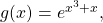

Hint 2
We have
![\[g'(x)=e^{x^3+x}(3x^2+1)>0\]](https://fractionshub.com/wp-content/ql-cache/quicklatex.com-9d66d94551626de4253597d5511c34eb_l3.png "Rendered by QuickLaTeX.com")
Hint 3
![\[h'(y)=e^{(1+y)^2}-e^{y^2}=e^{y^2}(e^{1+2y}-1).\]](https://fractionshub.com/wp-content/ql-cache/quicklatex.com-27b92dce674ed128ddd902b742597fef_l3.png "Rendered by QuickLaTeX.com")
Full Solution
Observe the relation
where We have
In particular,  for
for  Since
Since  we have
 and
and
![\[f'(x)=h'(g(x))g'(x)>0.\]](https://fractionshub.com/wp-content/ql-cache/quicklatex.com-3270087008c7a4b65059ab9723e7f086_l3.png "Rendered by QuickLaTeX.com")
The function  is strictly increasing.
Problem 6.
Let  be an
be an  symmetric matrix with non-negative real entries such that
  if and only if
  . Show that
  is a metric on
  .
.
Topic: Metric Space, Difficulty Level: High
Indian Statistical Institute, ISI MMath 2017 Problem 6 Hints along with Solution & Discussion
Hint 1
At first we verify that the minimum is achieved. Consider a path  between
  and
and  of length
  Among elements
![\[i_0,i_1,i_2,\ldots,i_k\]](https://fractionshub.com/wp-content/ql-cache/quicklatex.com-ed0527d5ce09ff484fa2dfb15d630ec4_l3.png "Rendered by QuickLaTeX.com")
there are at least two identical elements:  for some
  Then
Then
![\[i_0,i_1,\ldots,i_{r-1},i_s,\ldots,i_k\]](https://fractionshub.com/wp-content/ql-cache/quicklatex.com-9254f91f14347735b0d991b824d64667_l3.png "Rendered by QuickLaTeX.com")
is a path of length  Also,
Also,  and
and
![\[\sum^{k-1}_{l=0}w(i_l,i_{l+1})\geq \sum^{r-2}_{l=0}w(i_l,i_{l+1})+w(i_{r-1},i_s)+\sum^{k-1}_{l=s}w(i_l,i_{l+1}).\]](https://fractionshub.com/wp-content/ql-cache/quicklatex.com-bfbe0bb7988f78947ee167b67443a58c_l3.png "Rendered by QuickLaTeX.com")
It means that it is enough to consider only paths of length  There are only finitely many such paths, hence the minimum in the definition of
  is achieved. We check axioms of a metric.
Hint 2
For any path  between and we have
![\[\sum^{k-1}_{l=0}w(i_l,i_{l+1})\geq 0.\]](https://fractionshub.com/wp-content/ql-cache/quicklatex.com-debb93d067bf85e4c32e13f9341ea690_l3.png "Rendered by QuickLaTeX.com")
Hence,  Assume
  Since the minimum in the definition of is achieved, we have
![\[\sum^{k-1}_{l=0}w(i_l,i_{l+1})= 0 \eqno(*)\]](https://fractionshub.com/wp-content/ql-cache/quicklatex.com-b3150955a0b09cc752c7e283e14fee0a_l3.png "Rendered by QuickLaTeX.com")
for some path between and  Since all terms in the left-hand side of (*) are non-negative, we deduce that
![\[w(i_l,i_{l+1})=0, \ l=0,\ldots,k-1.\]](https://fractionshub.com/wp-content/ql-cache/quicklatex.com-e50d94138b8c3fbb265e162ef103f357_l3.png "Rendered by QuickLaTeX.com")
By definition of  it follows that
![\[i_0=i_1=\ldots=i_{k-1}=i_k.\]](https://fractionshub.com/wp-content/ql-cache/quicklatex.com-71f4ae07bfaca5d90dce74ad30799691_l3.png "Rendered by QuickLaTeX.com")
In particular,  We’ve proved that
  and
and 
Hint 3
Consider a path  Then
Then  But
But  hence
hence
![\[d(i,i)=0.\]](https://fractionshub.com/wp-content/ql-cache/quicklatex.com-0ef26b9256b37d67e872318ba3bdf110_l3.png "Rendered by QuickLaTeX.com")
This proves that 
Full Solution
At first we verify that the minimum is achieved. Consider a path between and of length Among elements
there are at least two identical elements: for some Then
is a path of length Also, and
It means that it is enough to consider only paths of length There are only finitely many such paths, hence the minimum in the definition of is achieved. We check axioms of a metric.
- For any path between and we have
Hence, Assume Since the minimum in the definition of is achieved, we have
for some path between and Since all terms in the left-hand side of (*) are non-negative, we deduce that
By definition of it follows that
In particular, We’ve proved that and
- Consider a path Then But hence
This proves that
- Consider a path between and
 such that
![\[d(i,j)=\sum^{k-1}_{l=0}w(i_l,i_{l+1}).\]](https://fractionshub.com/wp-content/ql-cache/quicklatex.com-111674179446868ca76874098292ac07_l3.png "Rendered by QuickLaTeX.com")
Observe that  is a path between and
  So,
So,
![\[d(j,i)\leq \sum^{k-1}_{l=0}w(i_{k-l},i_{k-l+1})=\sum^{k-1}_{l=0}w(i_{l+1},i_{l})=\sum^{k-1}_{l=0}w(i_{l},i_{l+1})=d(i,j).\]](https://fractionshub.com/wp-content/ql-cache/quicklatex.com-dfddaf3143df7116fdfada2868e74a7d_l3.png "Rendered by QuickLaTeX.com")
We’ve proved that
![\[d(j,i)\leq d(i,j).\]](https://fractionshub.com/wp-content/ql-cache/quicklatex.com-e19c9c146bc18bf391c994fbe9134176_l3.png "Rendered by QuickLaTeX.com")
Since this is true for all  we also get
![\[d(i,j)\leq d(j,i).\]](https://fractionshub.com/wp-content/ql-cache/quicklatex.com-e7e17ee80c38b4cb7efd870f38eac1df_l3.png "Rendered by QuickLaTeX.com")
Finally, 
- Consider two paths

 such that
![\[d(i,j)=\sum^{k-1}_{l=0}w(i_l,i_{l+1}), d(j,r)=\sum^{s-1}_{p=0}w(r_p,r_{p+1}).\]](https://fractionshub.com/wp-content/ql-cache/quicklatex.com-9d89ffa62518e65381ef0b19f465efd7_l3.png "Rendered by QuickLaTeX.com")
Observe that  is a path between and
  Hence
Hence
![\[d(i,r)\leq \sum^{k-1}_{l=0}w(i_j,i_{j+1})+w(i_k,r_1)+\sum^{s-1}_{p=1}w(r_p,r_{p+1})=\]](https://fractionshub.com/wp-content/ql-cache/quicklatex.com-2aa17a6e3b1f5ed41b4b3d78e2e01c7f_l3.png "Rendered by QuickLaTeX.com")
use that 
![\[=\sum^{k-1}_{l=0}w(i_j,i_{j+1})+\sum^{s-1}_{p=0}w(r_p,r_{p+1})=d(i,j)+d(j,r).\]](https://fractionshub.com/wp-content/ql-cache/quicklatex.com-3b93cbd3d5aea494d24366d8c680d3b1_l3.png "Rendered by QuickLaTeX.com")
The triangle inequality is proved.
 is a metric on
Group B
Problem 7.
Factory  produces
  bad watch in
  and factory
  produces bad watch in
  . You are given two watches from one of the factories and you don’t know which one.
- What is the probability that the second watch works?
- Given that the first watch works, what is the probability that the second watch works

Topic: Probability Theory, Difficulty Level: Medium
Indian Statistical Institute, ISI MMath 2017 Problem 7 Hints along with Solution & Discussion
Hint 1
Introduce two hypothesis
![\[H_1=\{\mbox{ the watches are from the Factory } A\},\]](https://fractionshub.com/wp-content/ql-cache/quicklatex.com-d6dc060be42bfad52b3d744f16568b1b_l3.png "Rendered by QuickLaTeX.com")
![\[H_2=\{\mbox{ the watches are from the Factory } B\}.\]](https://fractionshub.com/wp-content/ql-cache/quicklatex.com-34e4b8570e5d9ca97513bd5b5a89cb70_l3.png "Rendered by QuickLaTeX.com")
Hint 2
Then  Consider events
![\[E_1=\{\mbox{ the first watch works }\}\]](https://fractionshub.com/wp-content/ql-cache/quicklatex.com-3eb05d111a8ce9b7e764c81f10b6049d_l3.png "Rendered by QuickLaTeX.com")
![\[E_2=\{\mbox{ the second watch works }\}.\]](https://fractionshub.com/wp-content/ql-cache/quicklatex.com-fd5dfb3b990d04dd19b4cfe283417db2_l3.png "Rendered by QuickLaTeX.com")
It is given that 

Hint 3
By the law of total probability
![\[P(E_2)=P(E_2|H_1)P(H_1)+P(E_2|H_2)P(H_2)=\frac{0.99+0.995}{2}=0.9925\]](https://fractionshub.com/wp-content/ql-cache/quicklatex.com-093af691ba4e3245d4347196b24adc91_l3.png "Rendered by QuickLaTeX.com")
Full Solution
Introduce two hypothesis
Then Consider events
It is given that
- By the law of total probability
- We compute the probability
 by the definition:
![\[P(E_2|E_1)=\frac{P(E_1\cap E_2}{P(E_1)}\]](https://fractionshub.com/wp-content/ql-cache/quicklatex.com-0a44a1de78a1eda7497868eead64e690_l3.png "Rendered by QuickLaTeX.com")
From the previous part, we know  By the law of total probability
![\[P(E_1\cap E_2)=P(E_1\cap E_2|H_1)P(H_1)+P(E_1\cap E_2|H_2)P(H_2)=\frac{0.99^2+0.995^2}{2}=0.9850625\]](https://fractionshub.com/wp-content/ql-cache/quicklatex.com-bed69c9ee0c79b2fa82bf6c4e413ab3a_l3.png "Rendered by QuickLaTeX.com")
So,
![\[P(E_2|E_1)=\frac{0.9850625}{0.9925}=0.9925063\]](https://fractionshub.com/wp-content/ql-cache/quicklatex.com-2cf1e384f8fe70d184b70bfedae8d720_l3.png "Rendered by QuickLaTeX.com")
Problem 8.
Let  be a commutative ring containing a field
  as a sub-ring. Assume that is a finite dimensional -vector space. Show that every prime ideal of is maximal.
Topic: Abstract Algebra- Ring and Field Theory, Difficulty Level: Medium
Indian Statistical Institute, ISI MMath 2017 Problem 8 Hints along with Solution & Discussion
Hint 1
Let  be a prime ideal in . It is enough to check that
  is a field
Hint 2
The infinite sequence  is linearly dependent and there exists samllest
  such that
![\[c_0+c_1a+c_2a^2+\ldots+c_ma^m=0\]](https://fractionshub.com/wp-content/ql-cache/quicklatex.com-4c3b2fb10d4d7d2893b9bd04a78bfc06_l3.png "Rendered by QuickLaTeX.com")
for some non-zero coefficients  If
If 
Hint 3
Then
![\[a(c_1+c_2a+\ldots+c_ma^{m-1})=0.\]](https://fractionshub.com/wp-content/ql-cache/quicklatex.com-c6550d0cd196df163c47f9a850f1370f_l3.png "Rendered by QuickLaTeX.com")
Full Solution
Let be a prime ideal in . It is enough to check that is a field, i.e. every nonzero element of  has a multiplicative inverse. is a finite-dimensional -vector space. Hence the infinite sequence is linearly dependent and there exists smallest such that
for some non-zero coefficients If then
Let  be a representative of
  Then
Then
![\[x(c_1+c_2x+\ldots+c_mx^{m-1})\in I.\]](https://fractionshub.com/wp-content/ql-cache/quicklatex.com-1d1c89b941c1ec517f6c5727608e74d6_l3.png "Rendered by QuickLaTeX.com")
 hence
hence  The ideal is prime, so
![\[c_1+c_2x+\ldots+c_mx^{m-1}\in I\]](https://fractionshub.com/wp-content/ql-cache/quicklatex.com-1e2b968b1729e52c3fbe571ba2a97e37_l3.png "Rendered by QuickLaTeX.com")
and
![\[c_1+c_2a+\ldots+c_ma^{m-1}=0.\]](https://fractionshub.com/wp-content/ql-cache/quicklatex.com-7c2e1941048520e4bfd0dd21723ca351_l3.png "Rendered by QuickLaTeX.com")
The latter contradicts minimality of  So,
So,  and
and
![\[1=a\left(-\frac{c_1}{c_0}-\frac{c_2}{c_0}a-\ldots-\frac{c_m}{c_0}a^{m-1}\right)\]](https://fractionshub.com/wp-content/ql-cache/quicklatex.com-fec96be0a3572f8f1f81805390ff47f1_l3.png "Rendered by QuickLaTeX.com")
has a multiplicative inverse. is a field and is a maximal ideal.
Problem 9.
Let  be prime numbers and
  such that
  then show that
  .
.
Topic: Number Theory, Difficulty Level: Easy
Indian Statistical Institute, ISI MMath 2017 Problem 9 Hints along with Solution & Discussion
Hint 1
By assumptions of the problem 
Hint 2
Let be the order of  modulo
  i.e.
i.e.  is the smallest positive integer such that
Hint 3
From  we deduce that
 is prime, so
Now use “Fermat’s Little Theorem”.
Full Solution
By assumptions of the problem Let be the order of modulo i.e. is the smallest positive integer such that From we deduce that is prime, so By the Fermat Little Theorem,
![\[p\mid n^{p-1}-1.\]](https://fractionshub.com/wp-content/ql-cache/quicklatex.com-144b60fbcae9eb1bd876773ffc1f0b42_l3.png "Rendered by QuickLaTeX.com")
Since is the order of modulo it follows that 
Problem 10.
Determine all finite groups which have exactly  conjugacy classes.
Topic: Group Theory, Difficulty Level: Hard
Indian Statistical Institute, ISI MMath 2017 Problem 10 Hints along with Solution & Discussion
Hint 1
Let  be a finite group with exactly conjugacy classes. One conjugacy class is always the identity class
  .
.
Hint 2
Let and be sizes of other two conjugacy classes. Conjugacy classes form a partition of a group, so
![\[|G|=1+m+n.\]](https://fractionshub.com/wp-content/ql-cache/quicklatex.com-4c3ac835ad23561e26b9b6473d18ecdb_l3.png "Rendered by QuickLaTeX.com")
Hint 3
The size of a conjugacy class of  equals to the index of a centralizer of
Full Solution
Let be a finite group with exactly conjugacy classes. One conjugacy class is always the identity class  Let and be sizes of other two conjugacy classes. Conjugacy classes form a partition of a group, so
The size of a conjugacy class of equals to the index of a centralizer of i.e. it divides  So,
So,
![\[m\mid |G|, \ n\mid |G|.\]](https://fractionshub.com/wp-content/ql-cache/quicklatex.com-e1e82834d52769933349cc30a255cfec_l3.png "Rendered by QuickLaTeX.com")
Further,
![\[m\mid n+1=|G|-m, \ n\mid m+1=|G|-n.\]](https://fractionshub.com/wp-content/ql-cache/quicklatex.com-2b6d76f49aa64848aad631c1e578f9a4_l3.png "Rendered by QuickLaTeX.com")
Assume that  Then
Then  i.e.
i.e. 
 The only group of order is the cyclic group
  It is an abelian group, hence it has exactly 3 conjugacy classes.
Assume that  Then
Then  hence
hence 
 If
If  then
then  and
and  The only groups of order 4 are the Klein 4 group or the cyclic group
  Both are abelian and thus have 4 conjugacy classes.
If  then
then  and
and  There are two groups of order
  an abelian group
  and a nonabelian group
  (permutations on three elements). We check that has three conjugacy classes:

The only finite groups with three conjugacy classes are  and
and 
Problem 11.
Let  be a field,
  a prime integer. Suppose the polynomial
  is reducible in
 ![F[x]](https://fractionshub.com/wp-content/ql-cache/quicklatex.com-c0f6dac091a7af68f6a76c9ac5c0d44c_l3.png "Rendered by QuickLaTeX.com") . Prove that this polynomial has a root in .
. Prove that this polynomial has a root in .
Topic: Field Theory, Difficulty Level: Medium
Indian Statistical Institute, ISI MMath 2017 Problem 11 Hints along with Solution & Discussion
Hint 1
In the case  obviously
  is the needed root.
Hint 2
We assume firther that  Let
Let  be the splitting field of over
Hint 3
Then
![\[x^p-a=(x-b_1)\ldots(x-b_p)\]](https://fractionshub.com/wp-content/ql-cache/quicklatex.com-6c7ae499a97c0c46e079a857fab0c2de_l3.png "Rendered by QuickLaTeX.com")
for some 
Full Solution
In the case obviously is the needed root. We assume firther that Let be the splitting field of over Then
for some Since the polynomial is reducible, we may relabel its roots in such a way that for some  a polynomial
![\[f(x)=(x-b_1)\ldots(x-b_n)\]](https://fractionshub.com/wp-content/ql-cache/quicklatex.com-6dda04a418f847ae55dcc5f7f41fc66b_l3.png "Rendered by QuickLaTeX.com")
is a factor of  i.e. has coefficients in . Observe that for each
 Consider the free term of
  It is of the form
  Hence,
  Further,
![\[b^p=(b_1b_2\ldots b_n)^p=b^p_1\ldots b^p_n=a^n.\]](https://fractionshub.com/wp-content/ql-cache/quicklatex.com-667908fdd66afc5360534a09b3fd3fc6_l3.png "Rendered by QuickLaTeX.com")
Since  we can find integers
  such that
![\[1=rn+sp.\]](https://fractionshub.com/wp-content/ql-cache/quicklatex.com-20868fc392899a9bfb4146d703200334_l3.png "Rendered by QuickLaTeX.com")
We have  and
and
![\[(a^sb^r)^p=a^{sp}b^{rp}=a^{sp+rn}=a\]](https://fractionshub.com/wp-content/ql-cache/quicklatex.com-0ad01a4803da6189232f3840deec0c8d_l3.png "Rendered by QuickLaTeX.com")
 is a root of in .
Problem 12.
Let  be a finite-dimensional vector space over a field and let
  be a linear transformation. Let
  be a subspace such that
  . Suppose
  is diagonalizable. Is restricted to
  also diagonalizable?
Topic: Linear Algebra, Difficulty Level: Hard
Indian Statistical Institute, ISI MMath 2017 Problem 12 Hints along with Solution & Discussion
Hint 1
By assumption, is a direct sum of subspaces
![\[V=V_1\oplus \ldots\oplus V_k,\]](https://fractionshub.com/wp-content/ql-cache/quicklatex.com-e2f2367de8e73f54a599a5af2805f557_l3.png "Rendered by QuickLaTeX.com")
and on each subspace  acts as a multiplication by
  all
all  are distinct.
Hint 2
Consider  Then
Then
![\[w=v_1+\ldots+v_k\]](https://fractionshub.com/wp-content/ql-cache/quicklatex.com-4a46dd62ea19d66973fae8441100090b_l3.png "Rendered by QuickLaTeX.com")
for some 
 Let be the number of nonzero summands
Hint 3
By induction on we will prove that all  If
If  then
then  and there is nothing to prove.
Full Solution
By assumption, is a direct sum of subspaces
and on each subspace acts as a multiplication by all are distinct.
Consider Then
for some Let be the number of nonzero summands By induction on we will prove that all If then and there is nothing to prove. Assume the result is proved for number of nonzero summands  and let
  Then
Then
![\[Tw=\lambda_1 v_1+\ldots +\lambda_k v_k,\]](https://fractionshub.com/wp-content/ql-cache/quicklatex.com-7418a1041d419ba660c0244f4d36692b_l3.png "Rendered by QuickLaTeX.com")
![\[Tw-\lambda_i w=\sum_{j\ne i}(\lambda_j-\lambda_i)v_i\in W.\]](https://fractionshub.com/wp-content/ql-cache/quicklatex.com-7413be166c90ec3ffc850e44b9637c39_l3.png "Rendered by QuickLaTeX.com")
By inductive assumption, for all 
![\[(\lambda_j-\lambda_i)v_i\in W.\]](https://fractionshub.com/wp-content/ql-cache/quicklatex.com-d969875775c98413e61957690c8ab490_l3.png "Rendered by QuickLaTeX.com")
Eigenvalues  are distinct, so
  for
for  But then
![\[v_i=w-\sum_{j\ne i}v_j\in W.\]](https://fractionshub.com/wp-content/ql-cache/quicklatex.com-df052261880b25f1150031df306bbce6_l3.png "Rendered by QuickLaTeX.com")
This statement shows that in the decomposition
all summands are in  i.e.
i.e.
![\[W=(W\cap V_1)\oplus\ldots \oplus (W\cap V_k).\]](https://fractionshub.com/wp-content/ql-cache/quicklatex.com-dc3f6004023ffc246b6a5669b47acfba_l3.png "Rendered by QuickLaTeX.com")
The restriction of to is diagonalizable.
Hi! Thanks for your selfless help by putting out all the solutions free of cost on a public domain. I really appreciate it and I’m extremely thankful.
I have a doubt. Can you please explain the reasoning behind the first hint of problem 9?
This is trivially seen from the result . If
. If  then it implies that
  and so
  .
.
In problem 10, in the case when m<n, I understood that m+1 should be less than or equal to n.
But how did we immediately get in the next step, that n = m+1 ?
Since then from that it implies
  and thus the conclusion.
Understood both of them, thanks!
In Q.12. Why have we assumed that all eigenvalues are distinct, when we may have a diagonalizable linear transformation on V which has repeated eigenvalues as long as the sum of dimensions of the eigenspaces is dim(V)?